

A Conversation with Ashley Figueroa: Transgender Day of Visibility Special
A Conversation with Ashley Figueroa: Transgender Day of Visibility Special
Written by: Jaron Sanchez, Transgender Equality Associate
Q: Can you introduce yourself for those who may not know who you are?
My name is Ashley Figueroa, and I will tell you that I am an agent of change. The reason being that I have always been a person who has really lived my life not in the societal norm. I set for myself my standards, who I am, my identity, and really, what makes me whole. In that process of being an authentic person, it really brought me to a space where I knew that the resilience that I have built through that, I needed to take it to create the necessary changes, for vulnerable communities. That became the LGBTQ+ community with a focus on the transgender aspect of that.
Q: How did you work to address the Trans community specifically?
There was nothing that was for us by us. But around the same time, my sister Mulan Williams was establishing Divas and Dialogue, so that was already coming to fruition. The focus of the Gender Advancement Project was to start a collaboration. I collaborated with Nikole Parker, and we came together, founded the GAP. The focus of GAP was to act as a coalition of Central Florida community members with trans experience that included Trans-women, Trans-men, and gender expansive individuals so that we could be a coalition where we were advancing the landscape of the transgender community here. Trans people were being hired to stay at their programs. But while that was how it was presented, we were still being told what to do, what not to do.
Q: So what does GAP do today?
We have various programs with the Gender Advancement Project. The biggest one is the name change program. We do the name changes year-round, but we host a community clinic a quarter. We bring in transgender individuals; it's open to anyone in the transgender and gender expansive space. They come in for a name change clinic where we go through the whole paperwork with them, answer any legal questions they may have. We link them to our attorneys who assist with that. Our team goes over the entire name change process and the paperwork. By the time the clinic is done, the individual would have most of the paperwork completed. From there, we start going with them to the court in different counties. We set appointments and our team goes with them to court. We assist them in filing, and we're there to support and guide them in the process because the name change process itself can be intimidating due to the amount of paperwork, and it can get complex.
Q: How do you do your work in the face of injustice and hate?
In the times that we're in, I’d say history is really repeating itself. We're segregating people, we're stripping rights away from people. In this current administration, the transgender community is a really focused group- a political pawn to advance their agenda. I like to say that the transgender community right now is kind of carrying the weight for the LGBTQ+ community, because we’re a main target. Not 100%, but quite a quite a big percentage of it. But you know what? There's always got to be unity and solidarity within each other. That really is the time that we're in. That's really what's going to get us through because we know when communities are under attack that in order for us to win, right, we have to fight. Sometimes, you're going to lose, and that's okay. But if we don't fight, we're never going to win!
Q: How do you stay visible in this time where trans lives and experiences are being silenced and erased? And what does Trans Day of Visibility mean to you as an individual?
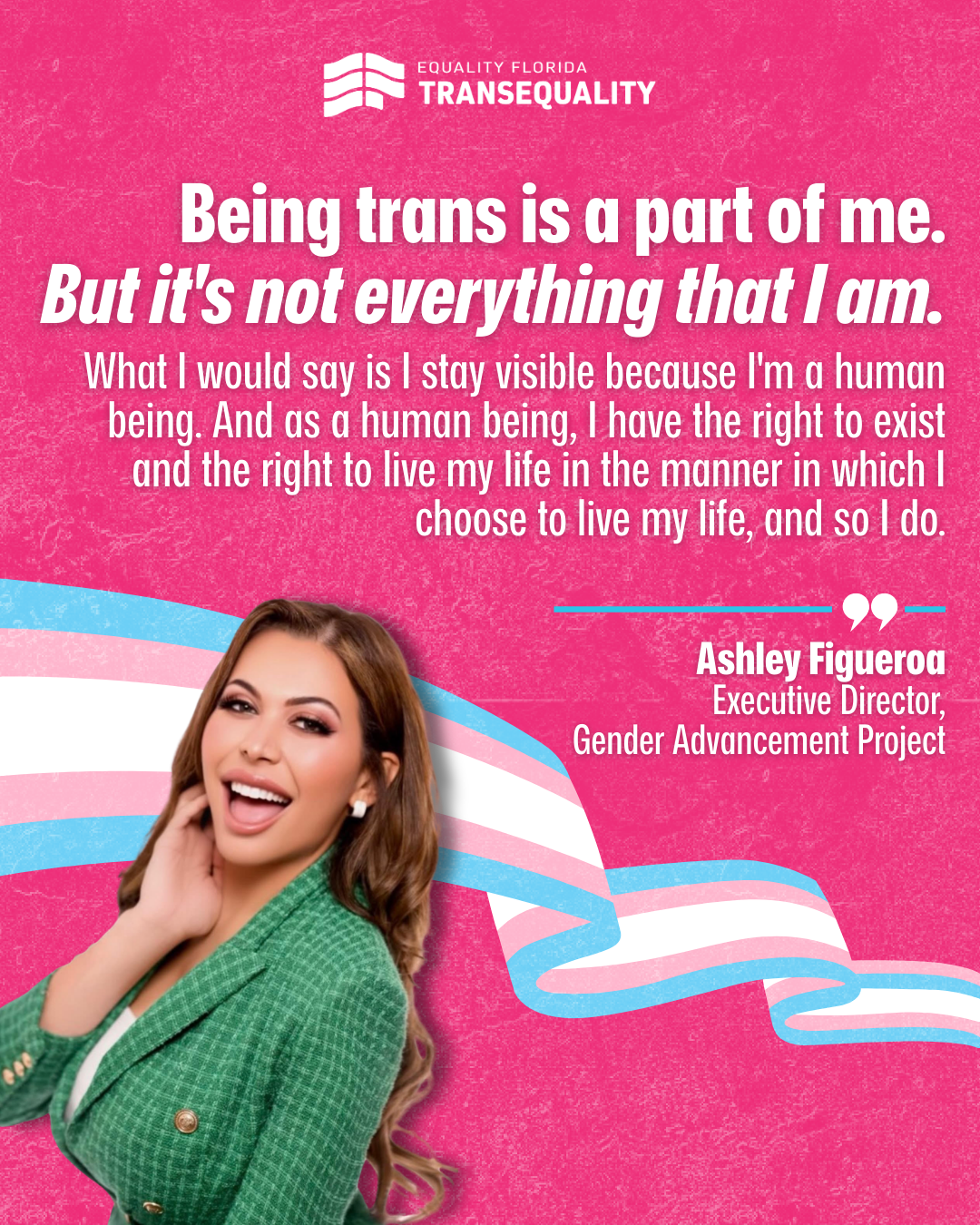
Being trans is a part of me, but it is not everything that I am. I stay visible because I am a human being and as a human being, I have the right to exist and the right to live my life in the manner in which I choose to live my life, and so I do. That is how I stay visible, because I often feel that because of our identities and all the attacks that are happening, they focus so much on that part of who we are that it overcasts everything else that we are. Being a human is a big common thing that we all have with each other right now. That is really what it is. Outside of that I am a person and I am a servant. I serve our society, I serve our communities, I serve our country through the stuff that I do. My goal in my life is to leave this place better than how I found it. I cannot save the whole entire world, but I can do my little part in whatever space that I am in. So being and remaining visible to me is having that resilience and being strong enough. What keeps me visible is knowing that there are people out there that are not comfortable even being themselves because of whatever issues that they might experience with the climate that we are currently in. So me having that courage to face adversity head on and say I am here and no one is going to change that, and I am here to stay, and I am going to fight to ensure that our community, along with the many individuals that do the same across our country and the world, that we continue to do this work that we do.
Q: How do you keep hope at the forefront of your mind when you do the work that you do?
The transgender community, like many vulnerable communities, has always found a way to get what we need. That will never change. Even though they might strip away affirming gender identity on documents, they will never be able to take your identity away from you. Your identity is your authentic self; you choose how to live your life and how you present yourself. Hold on to that hope because it is going to get better. All these organizations understand that we need each other right now. We need to tap into each other, including organizations and support services. Reach out to organizations and community members who can support you; we are going to get you what you need. We will do whatever it takes, wherever we need to call or wherever we have to get you. You are going to get the service that you need. It might not be an affirming identity document right now, but if you need mental health support, access to hormone replacement therapy, food, or healthcare, we can get that for you. We find ways to make it happen, and we are not going to let anyone keep us from that.
Q: How do you personally deal with feelings of fear when being visible as your true authentic self?
I will tell you that, I still deal with them at times. I still deal with having this gender dysphoria and being in certain places and stuff like that. When I first actually transitioned, I remember I was working at a financial institution locally, and I was so afraid. I had already started my hormone replacement therapy treatment, and I was still living my life as my previous identity. I had a therapist, and at the time, I would tell her ‘I'm doing this, but I don't know that I'm going to be able to pull this through’. And she said:
"Listen to me. I've already had enough sessions with you over a year, and what I'm going to tell you at this point is that, you can keep paying me and coming here and seeing me however often you need. But the reality is that the answer is still going to be the same. You are transgender and you're going to end up transitioning whenever you feel ready. That could be in five years. That could be in a year, that could be in ten, fifteen, twenty, thirty, forty, or fifty years. But the reality is that once you do transition, that's when you're going to be comfortable and not have to feel you know how you're feeling now. You know that you're living in the wrong identity and struggling like you are."
Q: Wow- that's a pretty powerful statement. How did that impact your transition?
I feared that if I transitioned, I would lose my job and family. The sad reality is that whatever chapter you embark on in your life, there is always a chance it will affect a lot of the things that are part of your life. Sometimes marriage can do that to you, sometimes changing careers, sometimes having problems with people, and so on. But when you are Trans, it's not just something out of your life—it's everything. That puts a lot at risk, because now everything becomes questionable to some people. They say, "Well, this is not right," or they have their own beliefs. What I would say to that is it took me understanding my concern about losing a lot of what mattered to me the most. Outside of family, keeping my job was the most primary concern, because my job provided for me. It's what kept me going. Then I learned that the city of Orlando actually has a human ordinance office in place where, if anything happens around discrimination in public accommodations, housing, or employment, you can file with that office, and it could be looked into, as long as the business, housing, or public accommodations are within the city limits. Having that did give me a level of reassurance that if something happened within city jurisdiction, I had that support there. Through my therapy, through speaking, and building my own support system with my friends and some of my family members, I was able to transition when the timing was right. I felt that I was ready. It wasn't as fast as I initially wanted—it took me a little over a year.
.jpg)
Ashley Figueroa at Equality Florida's Pride at the Capitol
Q: Was there anything else that helped you grow throughout your transition?
I was in a relationship where I was a step-parent. I wanted to make sure that the child at the time, who was six, was going to be okay and that it wasn't going to affect him. So I wanted to delay that, to ensure we went to a child psychiatrist to see what was the best way to handle that, which is another conversation on its own. But the main focus and point from that is that when we went to the psychiatrist, my concern was, is this going to be okay? Do I have to resign from being a step-parent because is this not good for the child?
Q: Putting your child before anything else, including your own transition, is something that should be commended within itself! What did the child psychiatrist have to say about you choosing to have them meet with them?
The child psychiatrist was able to point out and say, "Listen, kids are not born hating. Kids are not born disliking certain things. That's taught to them. You have to think the child is going to react in the environment that is created. So if you create a positive environment around this, everything's going to be fine.” When we shared the news with the little one, that's exactly what happened. What really came from my heart at the time was, "Listen, sometimes a person's body does not align with their soul, and sometimes people have to make a change in their appearance so that their body aligns with their soul. I have to make some changes, which means that I'm transitioning from male to female, and some things are going to change about me, how I look, and how I dress."
Q: That’s a great way to break down the whole process as simply as possible. How did he react?
He was like, ‘Oh, okay! So what does that mean exactly? Like you're a girl, you're going to be a girl?’ I was like, ‘Yep, and I'm going to have to have a medical procedure done- and while I’m recovering we're going to get to enjoy a lot of shakes together!’. I think most of what he heard was the shakes and he was totally fine and went through the process and became one of my biggest supporters. That love really helped me get through it as well.
Q: I feel like that within itself is an experience that brings a lot of hope. Personally, I have some friends who are dealing with similar feelings and don’t have access to HRT, or general gender affirming care- timing never seems right and they don't know where they fit in. Do you have any specific thoughts on this?
When I first transitioned, I thought that in order for me to transition, I needed to get all the surgeries, and I did- I had a lot of them done, a lot of the things transgender women oftentimes think and aspire to do. And I don't regret it. But the new generations have also taught me that you are trans because it's how you identify and how you feel. And sometimes you get to affirm that with procedures, medical procedures, cosmetic procedures, gender affirming care, and HRT. But the reality is that, in order to be trans, you don't need all that. There's not a handbook that says you have to follow everyone else as a transgender person.
Q: There are so many people here specifically in Florida that might feel hopeless because they can’t access certain gender-affirming care right now. Any words for them?
From a health care perspective, with rights being stripped away, especially in the state of Florida where it keeps getting worse every day, I would say to that is like, again, have to hope. But at the same time, be patient with yourself. When I first transitioned, I wasn't patient with myself. I did it pretty much within the time span of a year. I did a number of procedures, and everything happened so quickly. If I could go back with what I know today and what the younger generations have taught me about being gender expansive and everything, I would probably wait a little longer. I wouldn't have done things cosmetically, as I did, and as fast as I did.
Q: That’s usually not something I hear a lot- I’d say a lot of folks want to transition as quickly as possible, but I’m sure some folks who can’t get that care soon would appreciate your perspective on that. Could you elaborate?
That's a beautiful journey when you're on it. You start developing basically, almost like going through puberty whatever stage in life you're in. So I would say: be patient with yourself and enjoy your journey because Rome wasn't built in a day. It's going to take time. And it's a beautiful journey to be on and to get to know yourself and explore. You know yourself in that process because it's not just physically. A big part of I would say successful individuals is taking care of our mental health, right? It's not just getting cosmetic surgeries, it is ensuring that our mental health is in a healthy place, that we're dealing with dysphoria with the support that's necessary mentally, with professionals ensuring that we understand what the process is like, and that we understand that patience is part of that. And so that is one of the biggest pieces of advice that I could give someone who's considering and in a place that they feel they want to transition, but they're not able to do it yet.
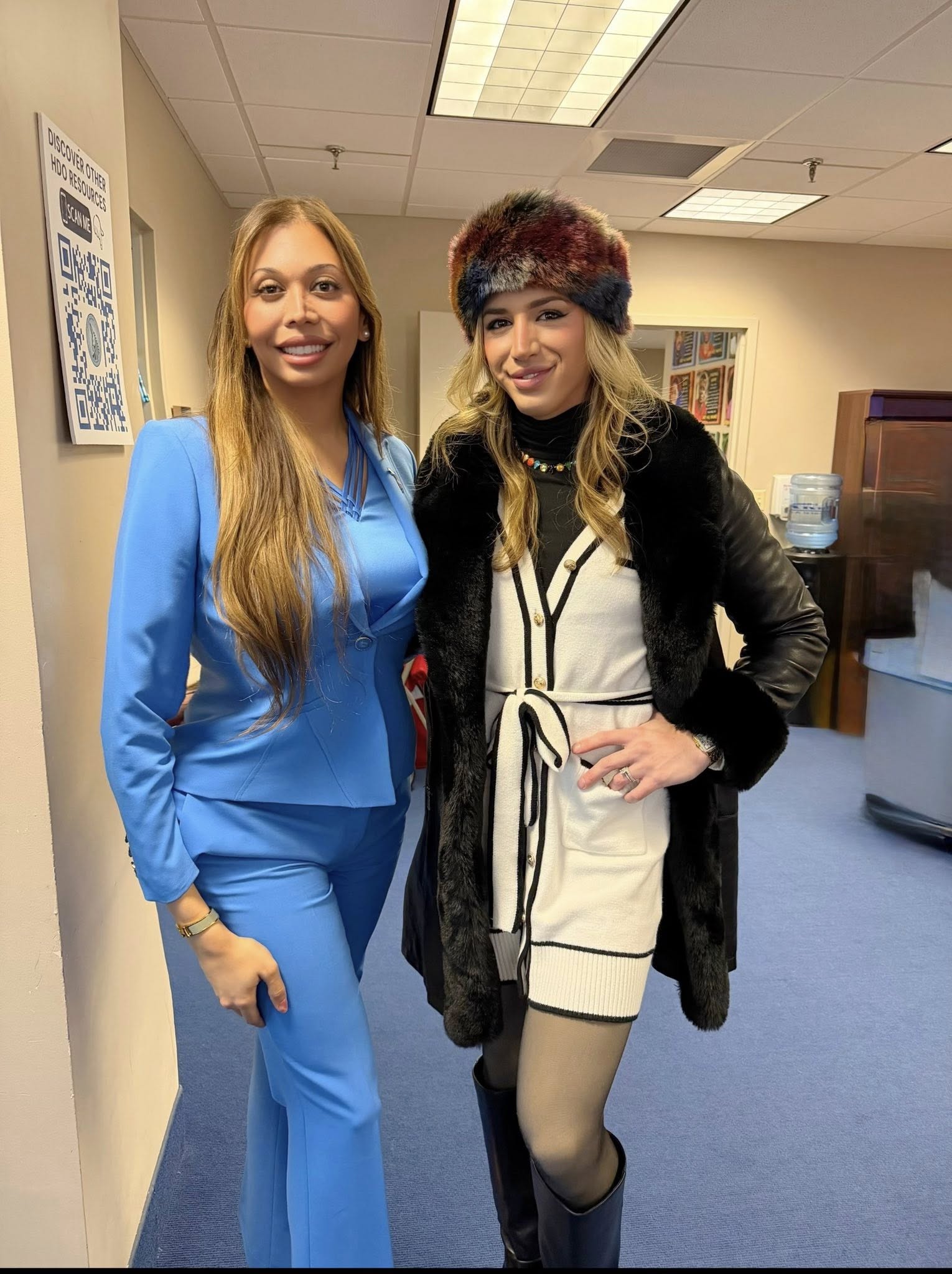
Ashley Figueroa with Equality Florida's Development Events Manager, Ryan Reynolds
Q: Is there anything you’d like to say about a day like Transgender Day of Visibility?
This day is a day not just to celebrate ourselves, but also historically highlights achievements and contributions, like racism awareness around discrimination and challenges, promoting safety, dignity, and more. But on this Trans Day of Visibility, I would say, find exactly what matters to you the most and whatever you feel you need, and focus on that. You might not want to highlight some of the challenges that the Trans communities are focusing on because it has become the norm where that is talked about quite often, and every other day we are learning about different things that are being stripped away. So if that means you are in a community and you are just sitting around other fellow community members and enjoying a cup of tea or coffee or soda, do that. Be patient in the process. Find the most important part. What really has helped a lot of people that we come in contact with is finding the things that you are passionate about because I can tell you that often, being in the community and whether it is to just show up to support, whether it is to show up to build community, whether it is to show up to give back to the community, that stuff can be therapeutic in itself and it can help you in that journey. Whatever way that is important to you and that impacts you in a positive way, build on it. And there are so many organizations, so many people that you can help. But in your journey, with everything happening and on this day of trans visibility, do not forget to be kind to yourself. Do not forget to be patient.
Q: What a great way to think about TDOV. Is there anything you’d like to mention in closing?
You can find us on Facebook and Instagram under Gender Advancement Project. In general, don't forget to support organizations that are trans led. Who better to know what we need than trans individuals ourselves? Give back in any way you can, whether that's to volunteer or support financially. Make some sort of contribution or just share our stories and our content. That goes a long way. When we do events, like a quarterly mixer, we bring in community members in different ways and settings just to be in community, support each other, and build that system of support. Sharing posts like that has allowed us to reach people who travel from other parts of the state because they feel they don't have the support they need. Sharing a post goes a long way sometimes. Give back whenever possible.
Q: What would you say to allies who want to help and support their local trans community on TDOV?
This goes not just for trans folks, but also for allies and accomplices. We don't need just allies. The trans community needs accomplices, people that will raise their voices, speak, and challenge things with us. History shows that transgender people have always been very resilient; they were the first ones to speak up and throw rocks at Stonewall. Now, the transgender community needs that support. If you're able to plug in and be that support, I would say do so and challenge when you see things that are a threat to the trans community or threatening our existence. In whatever space you're in, speak up and challenge that.
But the reality is trans rights are human rights. Healthcare is a human right- the dignity to accept and to live in our authentic selves is a human right. So as an ally when you see things like that, challenge that, and speak up and ensure that you do your part to educate as well.
You can support Ashley and GAP by donating to the organization by donating here. Your support is appreciated!
Make sure to follow Gender Advancement Project on social media: